June 2026 · 24 guests
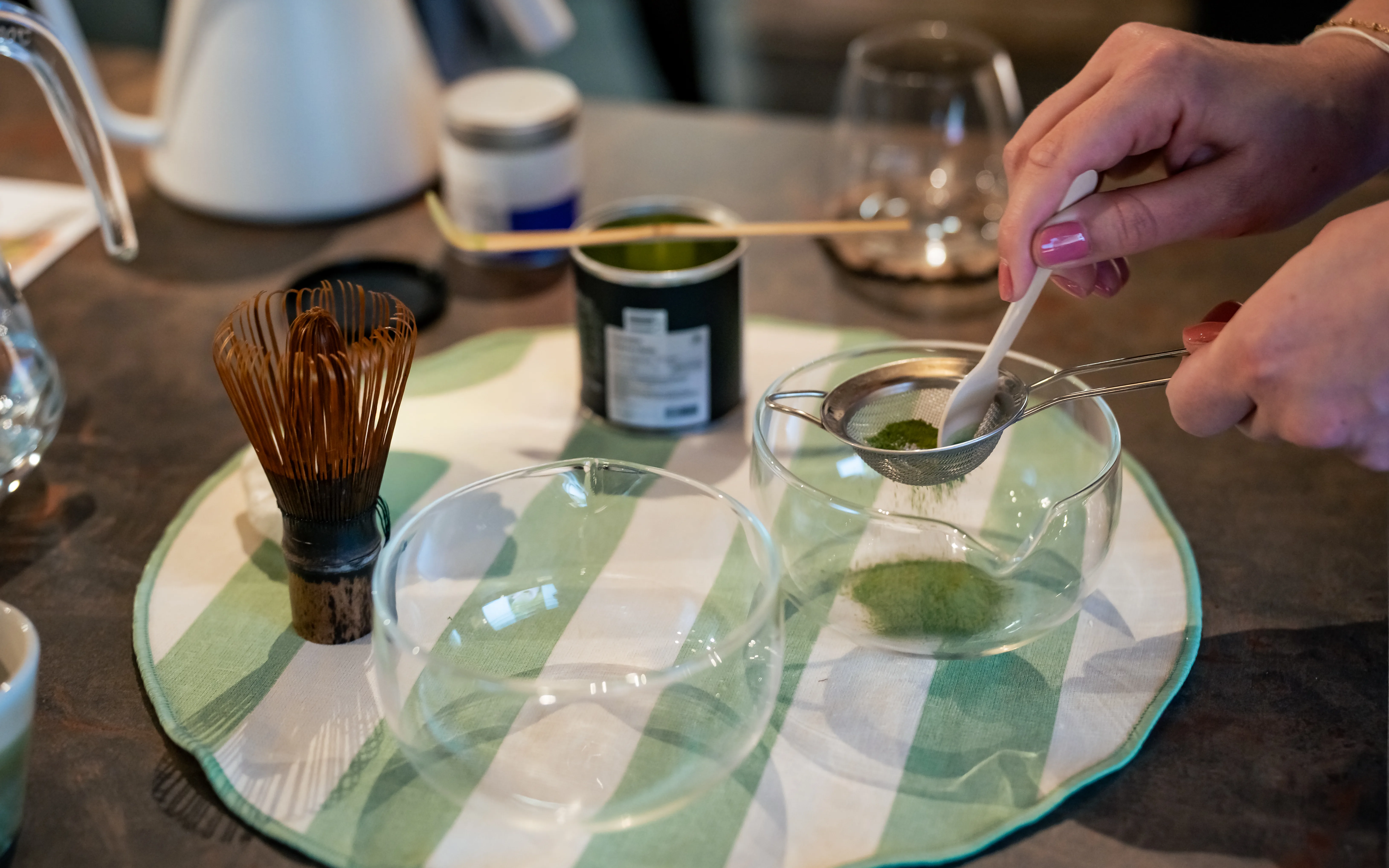
Matcha & More
One leaf, four preparations, and the grower’s reasoning behind each. Seats were 12,500 HUF.
Read the evening →i. Event Space — Gathering
Guests, producers, the room, the district — everyone should be a little further along afterwards. That includes us.
The next 30 days something on free booked add it to your calendar
The space
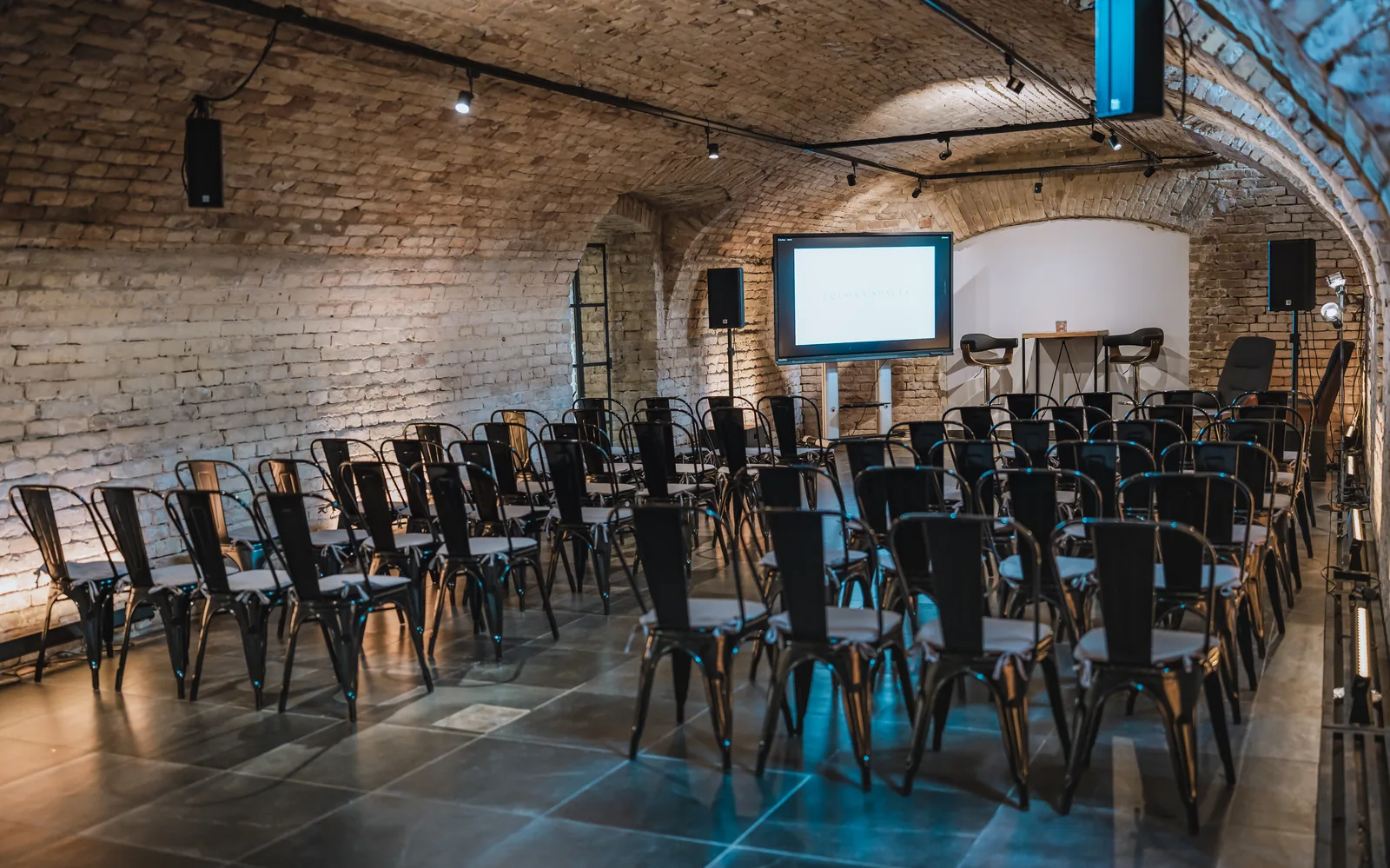
Two hundred and fifty square metres of vaulted nineteenth-century brick, in a working corner of Budapest's seventh district. Not restored into a theme. Not flattened into a function room. Honestly itself.
The vaulted ceiling sets the acoustic — quieter than it looks, warmer than a hall, generous enough for a full house and intimate enough for fifteen around one long table. The light is considered. The air is real.
What this isn't matters as much as what it is. It is not a hotel ballroom with banquet chairs. It is not a coworking room rented by the hour. It is not a venue that performs neutrality so that anything can be projected onto it. The cellar has a character, and it lends that character to whatever is held inside.
Most spaces wait to be filled. This one participates.
Every gathering, the same filter — PEC²: Personal · Environmentally Friendly · Creative · Collaboration.
On sale now
Everything we host ourselves goes on sale here, at the price it costs. A seat is yours the moment it is paid for — no waiting to hear back, no proposal to approve.
Get every new evening in your calendar → Google, Outlook & other calendars
Nothing is on sale this minute. The next dates are being set now — the planner below prices any evening you want to hold yourself, and the journal shows what these evenings have looked like so far.
Already held
The most honest description of this place is what has already happened in it. Every evening below can be held again privately, for your own circle — same producers, same room.
June 2026 · 24 guests
One leaf, four preparations, and the grower’s reasoning behind each. Seats were 12,500 HUF.
Read the evening →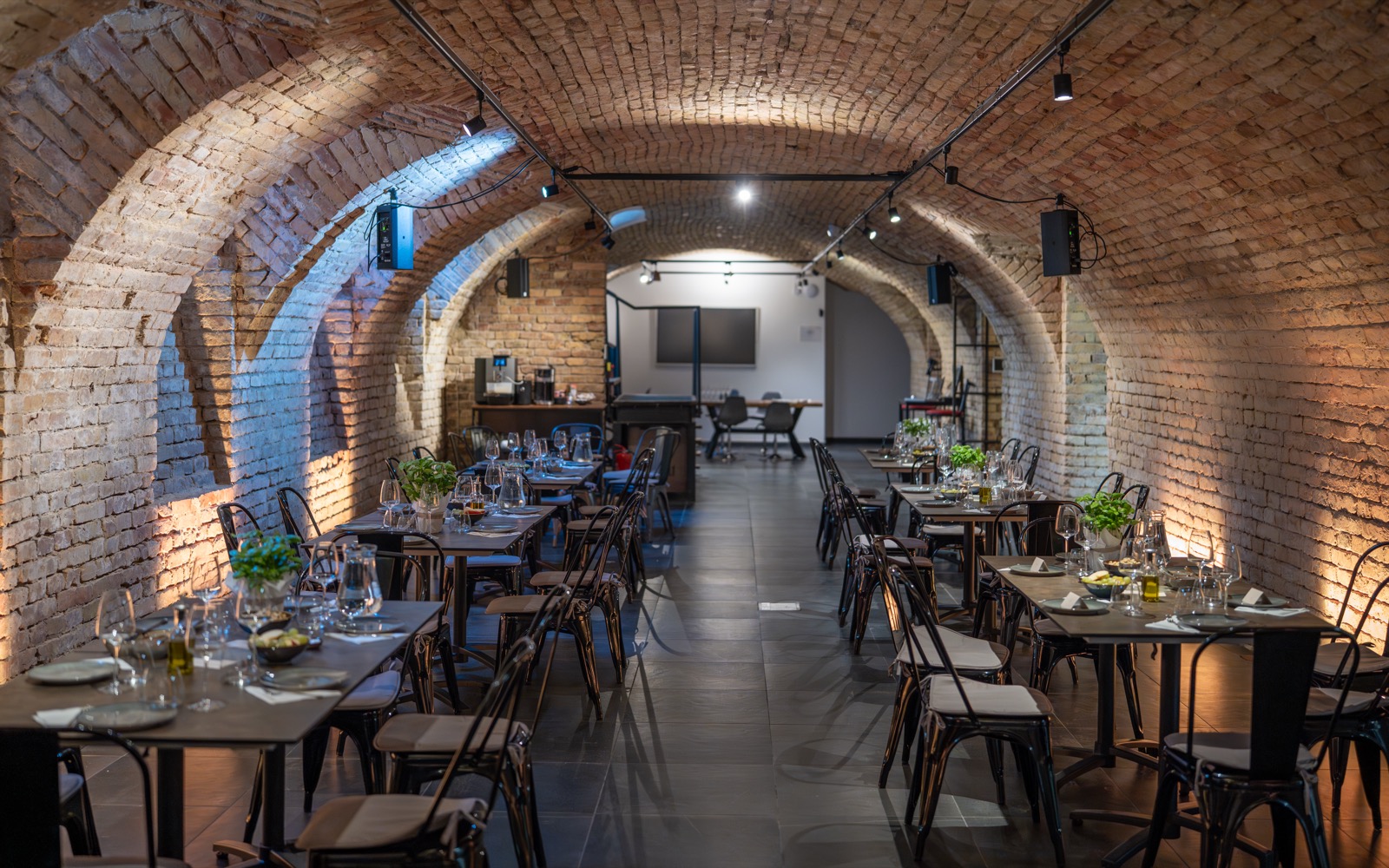
May 2026 · 40 guests
The first evening in the cellar: single-estate oils, harvest dates read aloud, bread from the corner.
Read the evening →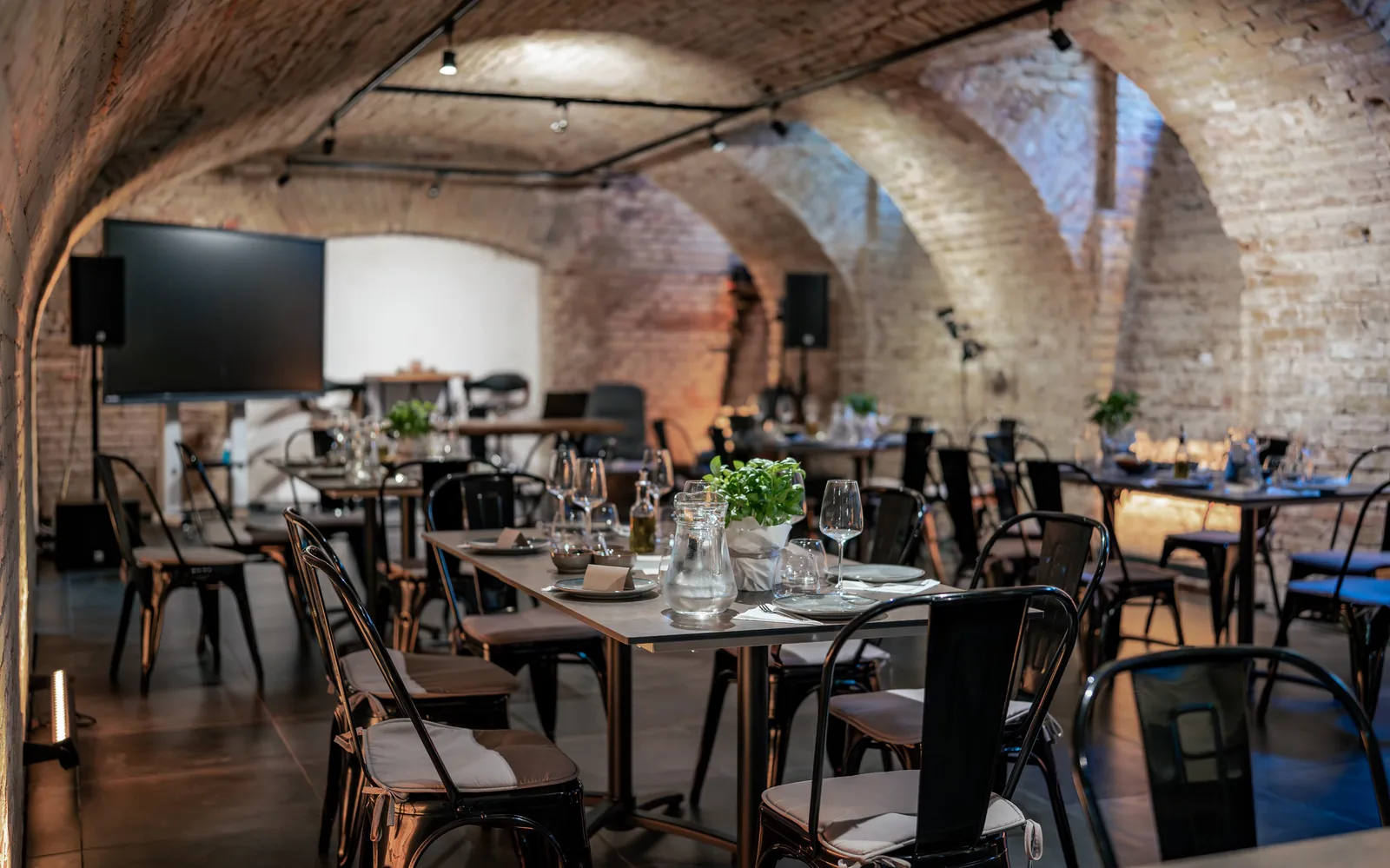
Any of them · privately
Pick the format, the day and the tasting in the planner below. The price appears as you choose, and half of it holds the date.
Rent the venue →Our events portfolio
Three families of evening. Each one exists as a public date you can buy a seat at, and as a private version for your own circle — same producers, same room, priced on this page.
One ingredient, followed through a full flight of tastings, hosted by someone who knows it from the inside. Every guest gets a printed booklet: what each station was, where it came from, and blank pages for your own notes and scores. Up to sixty guests — a tasting needs everyone within reach of the table and the person talking, which is fewer than the room could otherwise hold.
Eighteen stations across six families — fresh, white mould, washed rind, semi-hard, hard and blue. Hungarian manufactory pieces alongside Camembert, Brie, Morbier, Gruyère, Manchego and Roquefort, tasted in the order that lets each one be itself.
One question deeper. Why aged cheese and MAO-inhibitor medication do not mix, what neurogastronomy is currently finding in fermented food, and why the best cheeses come from grazed animals — which makes them a biodiversity question, not only a taste one.
Ten stations, from the freshest single-variety oils to hundred-point classics. Silky and buttery at one end, grassy and peppery at the other — and the bitterness that turns out to be the point.
The thing nobody tells you. That peppery catch at the back of your throat is oleocanthal, and it is measurable — bitterness tracks polyphenol content, which tracks how long the oil will keep. You leave able to read a harvest date instead of a label.
Ceremonial preparation with the whisk in your own hand, and why the good ones taste of the sea.
Why it feels different. Shading the plant before harvest raises its theanine, which is what makes matcha’s alertness unlike coffee’s — and the water temperature you use decides whether you taste that or only the bitterness.
The same flight structure, built around curing time: the same leg at twelve, twenty-four and thirty-six months, and what the breed and the acorn do to it.
What we are reading up on. Curing is water chemistry before it is flavour — and an acorn diet shifts the fat towards the same oleic acid that dominates olive oil, which is why these two will eventually be run as a pair.
Single-origin honeys tasted the way oils are — one landscape, several flowerings, and the map you can taste in the jar.
The part that surprises people. Honey keeps for millennia because almost no water in it is available to microbes; the pollen grains in a jar say where it actually came from; and the way it crystallises is a fingerprint of its sugar ratio, not a fault.
Next flight
The next evenings are announced here first. Leave your email and we tell you when a date opens — one message per new date, nothing else.
Every guest gets a printed A5 booklet made for that evening: what each station was, where it came from, how it was made — and blank pages for your own notes. Most people are still using theirs to shop months later.
Each station carries a five-step scale — forgettable, pleasant, tasty, characterful, remarkable. Writing down where a thing sits for you is what turns a tasting into a palate you can trust afterwards.
Each booklet carries a research chapter, because the interesting part is usually one question deeper than the plate. Nothing is oversold: where the science is early, the booklet says so.
Longer formats, where you leave with an object or a manuscript rather than a memory. Some run as a single evening, some as a course across a season.
Weekly evenings from September to June — a short novel of your own by the end, with a closing reading. See the course →
A working 4×5 camera, cut and assembled next door in the Fabric Space.
A movement, a face you design yourself, and an object that will outlast the evening.
Twenty-four doors, made in November for the December that follows.
Evenings that only exist because someone else is in them too — the house next door, a guest from elsewhere, a producer worth the trip.
An equinox gathering of independent natural winemakers, made together with the café the café next door. One shared afternoon across two neighbouring houses on Barcsay utca — neither of them possible alone.
When. Moved to spring — the date is being set now.
An evening, a country, a voice from inside it. A guest walks us through what is being made and unmade in their part of the world — followed by a tasting from that same place. Half tour, half tasting, entirely their story.
Two people who think seriously about the same question from different directions, in front of an audience that answers back. A programme of the EQUORA Institute, hosted in this cellar — the three below are in preparation.
Where felt knowledge and measured knowledge disagree — and which one to trust.
What happens to a research question when it stops being someone else’s.
The gap between the decision and the story we tell about having made it.
Interference evenings run on their own terms: an invitation and a ticket, or five Resonator vouchers earned on iterators.org. The online editions are open to everyone, free of charge.
Any of these can be held privately, for your own circle. The price is the room plus the format — both are on this page, and the calculator below puts them together. Rent the venue →
What you can hold here
Each format is a different configuration of the same space, the same care, the same restraint. We don't sell event packages — every gathering is shaped to its purpose.
A discreet, warm format for the circle of close family and friends. Tea, light food, room to remember without performance. Often arranged within a few days. Always handled with restraint.
A different room for a different kind of decision. Used for strategy days, partner anniversaries, investor briefings, board off-sites — formats where the surroundings change the conversation.
A controlled audience, theatrical lighting, the cellar as a quiet statement of confidence. Suited to launches that should be remembered — and that wouldn't survive a hotel ballroom.
Small numbers, long tables, a hand-picked menu in partnership with chefs and producers we trust. The format for thanking, celebrating, hosting a circle that doesn't need to be impressed by the room — only present in it.
Some of what we host, we curate ourselves — the programmes above. Some you bring to us, and we shape together. Either way: a considered evening for guests who care about what's behind what they consume.
How a booking works
The room is priced in the open, so nothing here depends on us writing back to you.
Price it yourself
Prefer to write? Tell us what you have in mind and we will work it out with you — the calculator is here for when you would rather not ask.
Every line below is the same for a birthday, a board day and a product launch. Choose, and the total moves with you — including what the day itself costs the house to run, and what the evening weighs.
Before you commit
In the room fee
Charged separately
Deposit and cancellation
The day’s colour
A tasting you have wanted to run, an evening only you could bring together — this room is open to it. Four questions decide whether it fits, and they are the same four we hold ourselves to.
Bring us one →Before you book
Tap a question for the answer.
The prices are above, so there is nothing to ask for. If you would rather stand in the room first, a visit takes 20–30 minutes — write, and we will offer you a time.
Send a message
If something is happening today, a message reaches us faster than anything else.
Nothing opened — that app is probably not installed on this machine. — or just write to info@equora.space.
A question before you book is best in writing — info@equora.space. If you would rather call: +36 20 580 3000, Tuesday to Saturday, 10:00–22:00.
Every evening passes the same filter: PEC². Four words that decide before the price does — work that fails them does not happen here, however well it pays.
Subscribe
One subscription, and every new evening appears by itself — with its time, place and a link to the ticket.